Native secret stores
Passwords per profile
Store named secrets in macOS Keychain, a private file store, or GPG-backed pass. Reference named keys from a cluster login without putting passwords in its YAML.
Set up password storageClient context switcher
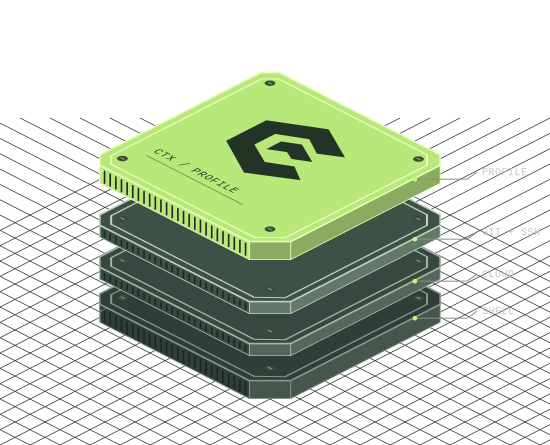
Switch identities with your workspace. Manage client passwords, give agents scoped Kubernetes tools, and review changes before they run.
macOS / Linux / WSL2
Interactive example
Select a client folder to see the identity and credentials its profile selects.
Read the switching guide$ cd ~/clients/acme
Kubernetes operations · local MCP
Teach ctx the cluster names, namespaces, service aliases, and runbooks for one client. Ask your agent to trace a request, inspect a deployment, or propose a restart.
Read tools can investigate immediately. Change tools ask you to approve the profile, target, and command through your MCP client.
Configure the operations server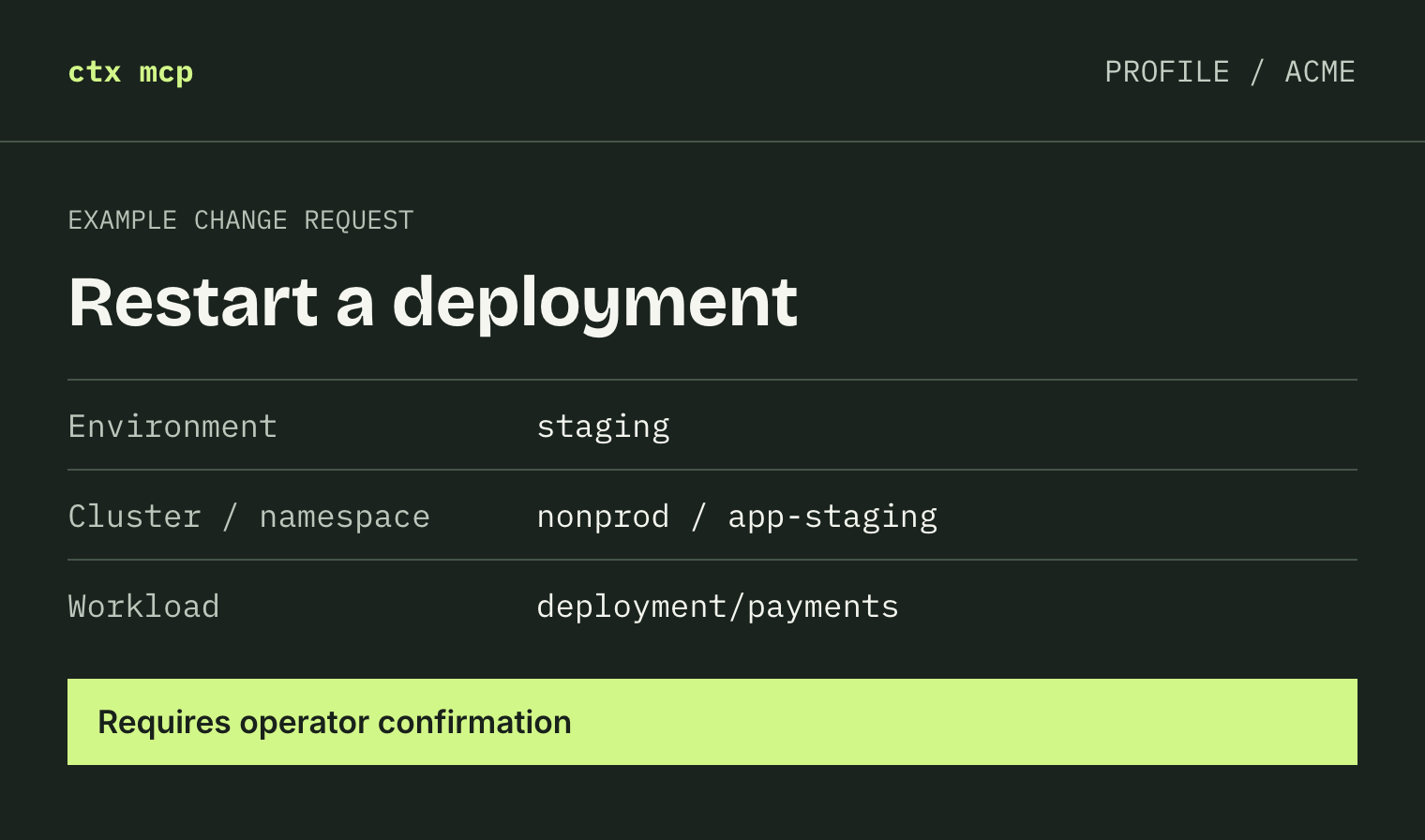
Native secret stores
Store named secrets in macOS Keychain, a private file store, or GPG-backed pass. Reference named keys from a cluster login without putting passwords in its YAML.
Set up password storageExternal integrations
Keep rotation and access policy in your team’s secret manager. Use Vault Agent or the 1Password CLI alongside ctx for process-level credential injection.
Compare the workflowsCloudflare · remote MCP
Connect any compatible HTTP MCP client to search and read the public ctx guides. No client workspace or cluster credentials are required.
Connect the documentation MCPDocumentation
From your first profile to a verified client connection.